
4 of the Best Accessible Travel Destinations in the USA for Families
When my mother received a Parkinson’s diagnosis more than a decade ago, it didn’t occur to me that one of the challenges we’d face as a family would be finding accessible places to travel. But once she began using a walker and, eventually, a wheelchair, I realized just how difficult it can be to plan an accessible family vacation.
Suddenly, questions I’d never thought about became essential: Would the hotel room actually work with her wheelchair? Could she get into the bathroom? Would the museum have somewhere for her to sit and rest? Could we get her onto the beach? And how were we supposed to fit a wheelchair, walker, car seat and everyone’s luggage into one already overstuffed car?
Since then, I’ve spent years researching accessible travel destinations in the USA and traveling with my mother, my niece, and other family members with very different needs. One thing I’ve learned is that accessibility means much more than installing a wheelchair ramp.
The best accessible vacation destinations consider travelers with mobility, vision, hearing, cognitive and sensory disabilities. Increasingly, destinations are also providing detailed information before travelers arrive — an important consideration when an “ADA-accessible” hotel room or attraction still might not meet one traveler’s particular needs.
There’s no such thing as a universally accessible city. But some U.S. destinations are doing significantly more than others to make travel easier.
These four stand out.
What are the best accessible travel destinations in the USA?
Some of the best U.S. destinations for accessible travel include Fort Wayne, Indiana; Milwaukee, Wisconsin; Mesa, Arizona; and Myrtle Beach, South Carolina. Each has invested in accessibility in different ways, from wheelchair-accessible beaches and all-terrain wheelchairs to sensory-friendly attractions, autism-certified businesses and detailed accessibility information that travelers can review before arriving.
The right destination, however, depends on the traveler.
A city that's excellent for wheelchair users won't necessarily be the best destination for an autistic child. A destination with sensory-friendly museums may present significant obstacles for a blind traveler. Even two wheelchair users can have completely different requirements.
Before choosing an accessible family vacation, consider transportation. Flying can add challenges for disabled travelers, especially those traveling with wheelchairs and other mobility equipment. For some families, the best accessible vacation may be a destination close enough to reach by car.
That has certainly been true for my family.
Because flying has become increasingly difficult for my mom, we drive whenever possible. She lives in Wisconsin, so we’ve taken several accessible Midwest road trips — including trips to Indiana — rather than dealing with airports, mobility equipment and airplane bathrooms.
Fortunately, one of our favorite road-trip destinations is also becoming one of the Midwest's most interesting cities for accessible travel.
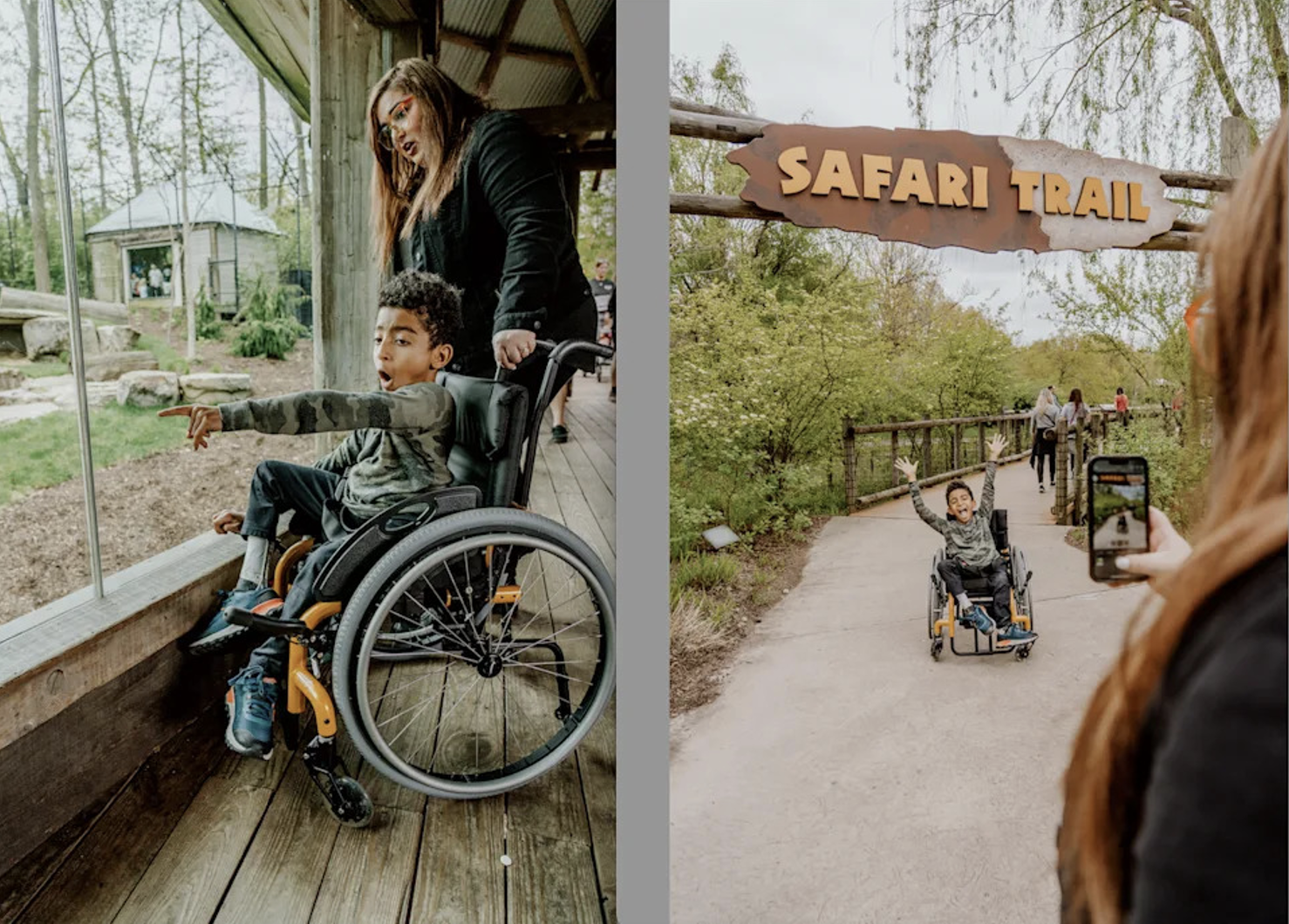
Fort Wayne Zoo is highly accessible to visitors who use a wheelchair.
1. Fort Wayne, Indiana: A Midwest destination investing in universal accessibility
Best for: Multigenerational families, wheelchair users and travelers with sensory or cognitive disabilities
Fort Wayne is affordable, family-friendly and within road-trip distance of much of the Midwest. More importantly for disabled travelers, the city has made accessibility an ongoing destination-wide initiative rather than leaving individual attractions to figure it out on their own.
In 2026, Visit Fort Wayne introduced accessibility maps for 16 local attractions and venues. The maps identify resources for mobility, hearing, vision, sensory and cognitive needs, allowing travelers to get a much clearer picture of what they'll encounter before arriving.
That's an important distinction. One of the hardest parts of accessible travel isn't simply finding an attraction that says it's “accessible”; it's determining exactly what that means.
Autism- and sensory-friendly attractions in Fort Wayne
The Fort Wayne Zoo is particularly noteworthy for families traveling with autistic or sensory-sensitive visitors. The zoo is both a KultureCity sensory-inclusive facility and an IBCCES Certified Autism Center. It provides sensory resources, designated quiet areas and sensory guides, and in 2026 began offering Sensory-Friendly Sundays with reduced music, ride noise and lighting.
Science Central, the city's hands-on science museum, addresses another problem families frequently encounter: finding attractions that can accommodate both children and adults with disabilities.
The museum has an accessible elevator and wheelchair stairlift, assisted-listening devices, ear defenders, wheelchairs and a universal family restroom with an adult-size changing table. Its Disability Days and Nights feature reduced sound, increased lighting in normally dark spaces, smaller crowds at some sessions and access to a sensory room.
Adult changing tables may sound like a small detail to travelers who don't need them. For families who do, their availability can determine whether visiting an attraction is possible at all.
An accessible performing arts center
The city's accessibility push extends to the arts.
After a major renovation, the Louis Kahn-designed Arts United Center reopened in 2025 with improvements designed to make the building more accessible not just to audience members, but also to performers and employees. The renovated theater includes increased accessible seating, ramps and elevators that improve movement throughout the property.
That's a good example of universal design moving beyond the idea of simply accommodating disabled guests.
Accessible air travel in Fort Wayne
Families who do need to fly will find unusually extensive accessibility features at Fort Wayne International Airport.
The airport goes beyond compliance with the ADA and now offers a sensory room, hearing loop, cane trail, adult changing table, low-profile baggage scales, accessible-height counters and GoodMaps navigation. It also participates in the Hidden Disabilities Sunflower Program, through which travelers with non-visible disabilities can discreetly signal that they may need additional time, patience or assistance.
For families juggling mobility, sensory and cognitive needs, having accessibility addressed at the airport as well as attractions can make an enormous difference.
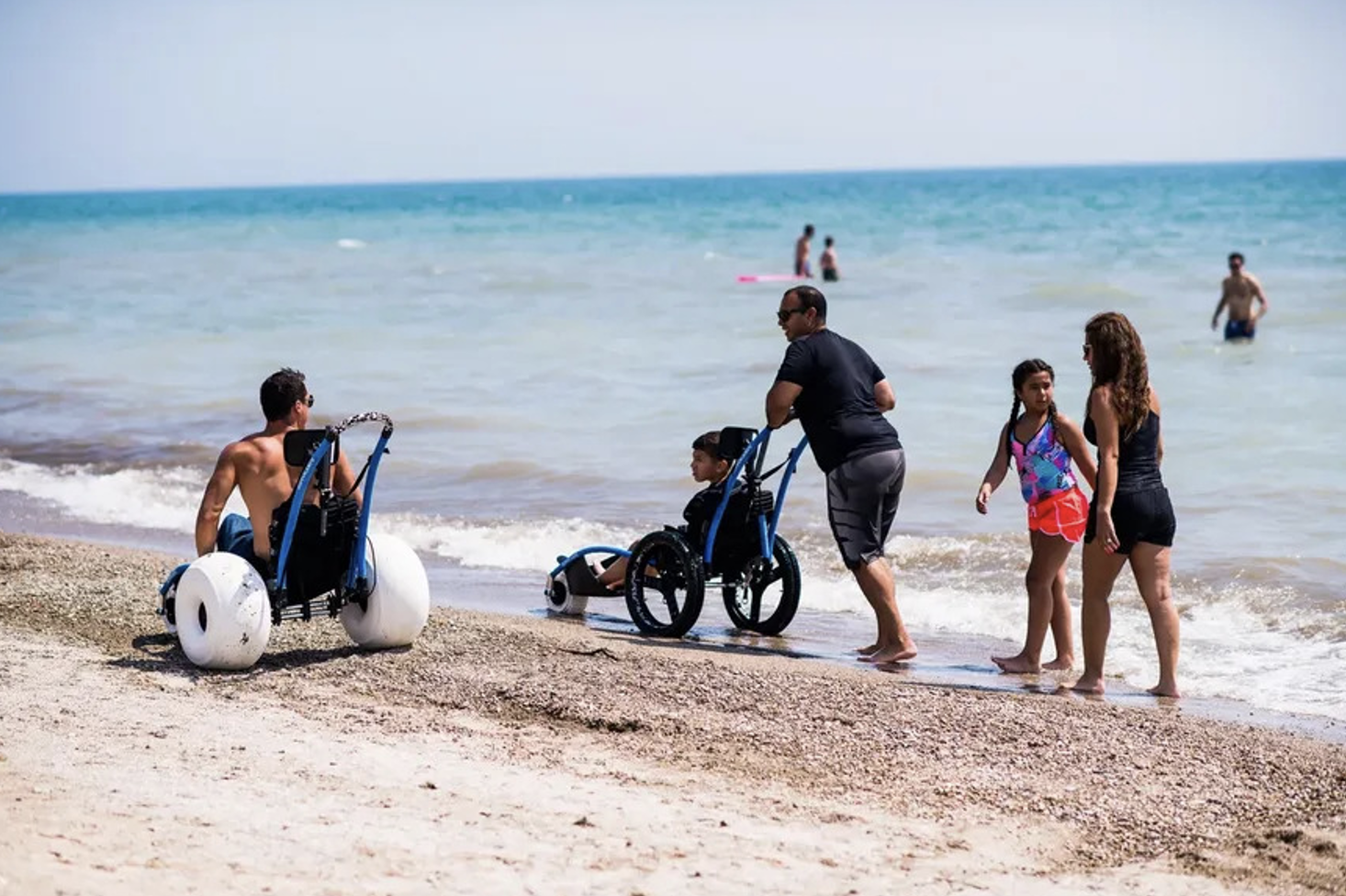
Milwaukee's accessible beaches offer different types of beach wheelchairs
2. Milwaukee, Wisconsin: Wheelchair-accessible beaches, arts and outdoor recreation
Best for: Wheelchair users, multigenerational trips and accessible outdoor recreation
Milwaukee is my hometown, and my mom still lives here, so I've spent years navigating the city with her wheelchair.
One of our regular stops is the Milwaukee Art Museum. The spectacular lakefront building, designed by architect Santiago Calatrava, is wheelchair- and stroller-accessible, with elevators serving all levels and manual wheelchairs available at the admissions desk. Assistive listening technology and ASL interpretation can also be arranged for group tours.
But some of Milwaukee's most interesting accessibility efforts are happening outdoors.
A wheelchair-accessible beach on Lake Michigan
Milwaukee may not immediately come to mind when you think “beach vacation,” but Bradford Beach on Lake Michigan has become remarkably accessible.
A permanent concrete ramp provides access to the beach, while seasonal rollout mats extend across the sand toward the water. Visitors can also reserve beach wheelchairs with wide tires designed to move across sand and into the lake.
For wheelchair users who routinely encounter beaches that stop being accessible the moment the pavement ends, that's a meaningful difference.
Accessible performing arts in Milwaukee
Another favorite family outing is the Milwaukee Ballet. I've taken my mother and niece to see productions including Cinderella, Sleeping Beauty and The Nutcracker, and these multigenerational outings have given me firsthand experience navigating the Marcus Performing Arts Center with a wheelchair.
The venue offers accessible and stair-free seating, wheelchair assistance and assistive listening devices that can work with certain hearing aids. It also offers services including ASL interpretation, audio description and, for some productions, touch tours for blind and low-vision guests. Sensory-friendly resources and performances are available as well.
Those accommodations matter, but so does staff attitude. On our visits, employees have repeatedly helped us navigate the theater, stored mobility equipment and kept my mom company while I've gone to retrieve the car.
Sometimes the difference between an attraction technically being accessible and actually feeling accessible comes down to the people working there.
Accessible nature near Milwaukee
Nature-minded travelers should also consider Wehr Nature Center in nearby Franklin.
Wehr's one-mile All Abilities Loop uses accessible boardwalk and hard surfaces to take visitors through wetland habitats and past an accessible pier. The center provides free adaptive equipment including walkers, wheelchairs, canes and seat canes. Sensory packs, tactile resources and audio trail descriptions in English and Spanish are also available.
Even more unusual is its all-terrain wheelchair. Through a partnership with Access Ability Wisconsin, visitors can reserve the chair for free and can even arrange to take it off-site to explore another outdoor destination.
For families searching for wheelchair-accessible outdoor vacations, programs like this dramatically expand where a traveler can go.
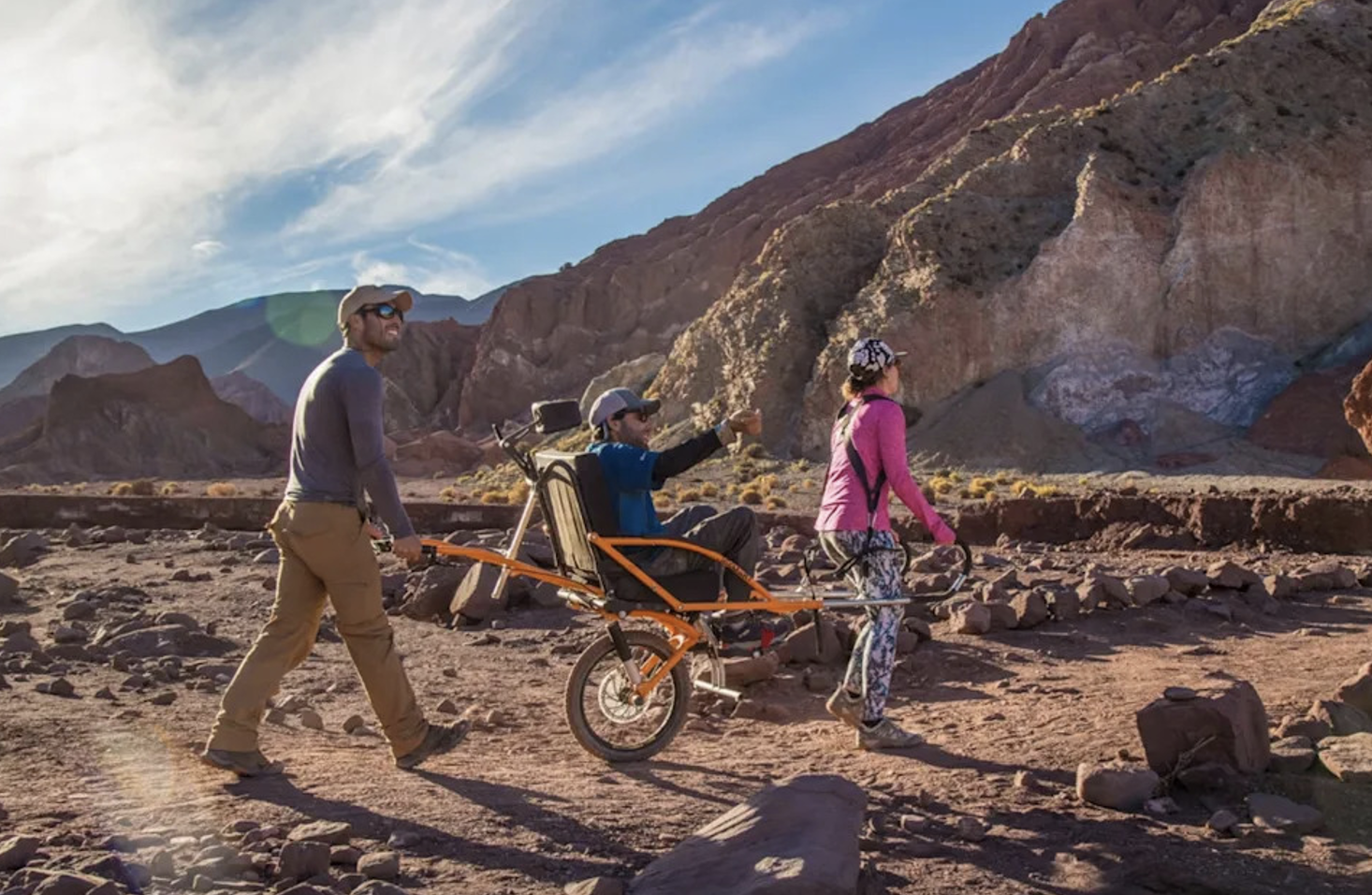
Mesa, Arizona is one of the best accessible travel destinations for people who use a wheelchair or who have autism
3. Mesa, Arizona: One of America's leaders in autism-friendly and accessible travel
Best for: Autistic travelers, wheelchair users, blind and low-vision travelers and families with food allergies
Mesa, Arizona has spent years positioning itself as an accessible vacation destination, particularly for autistic travelers and people with mobility disabilities.
It became the country's first Autism Certified City and later became the first city to receive Wheel the World's destination verification for accessibility. Mesa also participates in the Hidden Disabilities Sunflower Program.
Nearly 60 businesses have had front-facing staff and executives undergo specialized training to help them recognize and meet the needs of travelers with autism. Given the sheer number of museums, hotels, restaurants, and other attractions that are autism-certified (like the Children’s Idea Museum), it is one of the best autism-friendly vacation destinations.
What makes Mesa especially interesting, though, is how much emphasis it places on providing accessibility information before travelers arrive. To help simplify the challenging trip-planning process, Mesa offers Threshold 360 virtual tours that allow a family or individual to do a full virtual tour of a hotel room, restaurant, museum, or cultural facility before visiting.
Resources for autistic travelers in Mesa
Mesa's autism initiative includes trained businesses and tourism organizations as well as resources designed to help families plan ahead.
Virtual tours allow travelers to preview some hotels, restaurants and attractions before visiting. This can be invaluable for autistic travelers who benefit from knowing what to expect, but it's equally useful for someone traveling with a physical disability.
I've learned the importance of this firsthand. I once booked an ADA-accessible hotel room for my mom only to discover that the bed was so high her feet couldn't reach the floor. I had to physically lift her onto and off the bed.
That's the problem with treating “ADA accessible” as all the information a disabled traveler needs. A room can meet accessibility standards and still not work for a particular person.
Verified accessibility information for wheelchair users
Mesa's partnership with Wheel the World addresses that problem by providing detailed, verified accessibility information for hotels, restaurants and activities.
Instead of simply labeling a property “accessible,” Wheel the World assesses specific features such as entrances, bed heights, bathroom layouts, showers and maneuvering space. Travelers can then determine whether those measurements work for their particular needs.
Mesa also offers Aira, which connects blind and low-vision users with trained visual interpreters who can provide real-time information about their surroundings.
Allergy-friendly travel in Mesa
Accessibility isn't limited to mobility or sensory needs.
Traveling with severe food allergies can require extensive research, especially when cross-contact could result in a medical emergency. Mesa has expanded its accessibility efforts with a citywide Food Inclusion Initiative focused on food allergies, celiac disease, gluten-free dining, cross-contact prevention and ingredient transparency.
Participating restaurants and hotels receive education and training aimed at making dining safer and easier for travelers with dietary restrictions. Mesa restaurant Intentional Foods takes the guesswork out by not using any of the nine most common allergens (like gluten, soy, dairy, and peanut) in any of their foods and by having very clear ingredient signage. Though I don’t have any deadly allergies, I still wanted to dine here, and I absolutely loved the food. It’s not just allergy-free food; it’s just plain good food, which means it works for diverse families with picky eaters.
For a multigenerational family in which one person uses a wheelchair, another is autistic and someone else has a serious food allergy, that broader definition of accessible travel can make planning considerably easier.
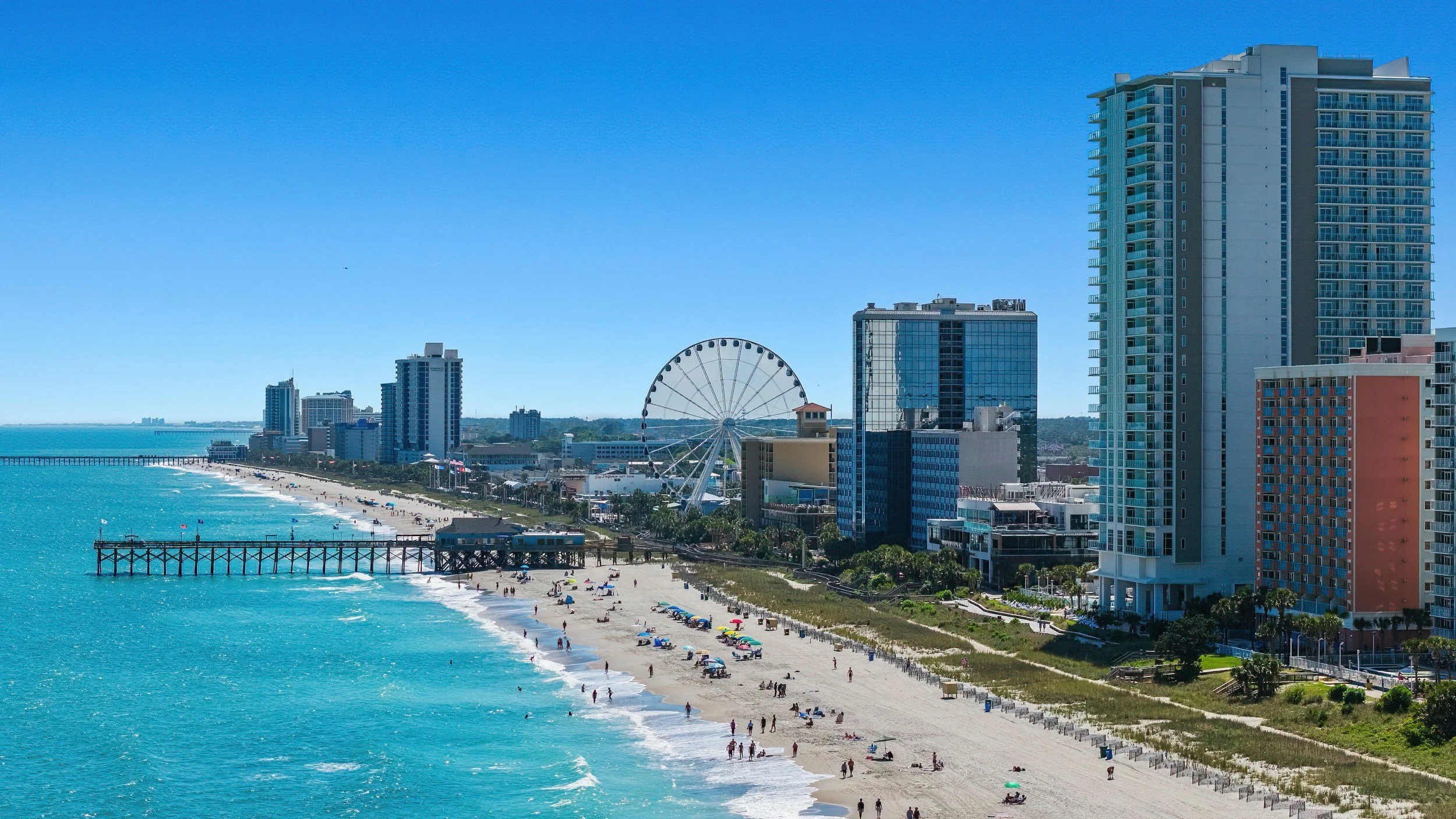
Myrtle Beach, South Carolina is one of the best accessible travel vacation destinations
4. Myrtle Beach, South Carolina: An accessible beach vacation for different abilities
Best for: Wheelchair-accessible beach vacations and families traveling with autistic or sensory-sensitive children
Beaches present an obvious problem for wheelchair users: sand.
Myrtle Beach has worked to reduce that barrier while also developing resources for autistic and sensory-sensitive travelers. That combination makes the South Carolina coast particularly appealing to families whose members have different accessibility needs.
Wheelchair-accessible beaches in Myrtle Beach
Throughout the Grand Strand, travelers can find accessible beach access points with ramps and mesh walkways. Beach-going wheelchairs are available at no charge in communities including North Myrtle Beach and Surfside Beach.
There are accessible options beyond swimming and sunbathing, too. Wheelchair-accessible fishing piers include Cherry Grove Pier and Springmaid Pier, expanding the number of coastal experiences available to travelers with limited mobility. Coastal Myrtle Beach State Park offers a special motorized track chair that can navigate loose sand. The State Park also has a pier that can accommodate traditional wheelchairs.
That makes Myrtle Beach a strong option for families specifically searching for a wheelchair-accessible beach vacation rather than simply an accessible hotel near a beach.
Autism-friendly travel in Myrtle Beach
As a recognized autism-friendly travel destination, Visit Myrtle Beach, along with locally based Champion Autism Network (CAN) and TravelAbility, launched The Beach is for everyBODY: Sensory-Friendly Pledge in 2022.
Since then, over 150 businesses along the Grand Strand have pledged their support or received CAN certification to create a welcoming, inclusive, and sensory-friendly beach experience for everyone. Their Project Lifesaver program also helps protect visitors who may wander off, and has trained staff at participating attractions and restaurants to compassionately support visitors experiencing sensory overload.
Surfside Beach was recognized as an autism-friendly destination in 2016, and that effort has since expanded. Surfside Beach, the City of Myrtle Beach and Horry County are now recognized as autism-friendly destinations through partnerships with Champion Autism Network.
Travelers can find sensory-friendly hotels, restaurants, attractions and events, while the Autism Travel Card provides families with a discreet way to communicate that someone in their party is autistic and may need additional support.
Myrtle Beach International Airport also participates in the Hidden Disabilities Sunflower Program, giving travelers with non-visible disabilities another way to signal that they may need additional assistance or patience while navigating the airport.
How to choose an accessible vacation destination
After years of traveling with my mom, I've learned not to ask simply, “Is this accessible?”
Instead, I ask much more specific questions.
Can she get from the parking lot to the entrance without encountering stairs? How wide is the hotel room doorway? How high is the bed? Is there a roll-in shower? Can she remain in her wheelchair at the theater instead of transferring to a seat? Does the beach have a mobility mat? Is there an adult changing table? Is there somewhere quiet to retreat from noise and crowds?
For autistic travelers, families might need to know whether an attraction offers sensory guides, quiet areas or reduced-stimulation hours. Blind travelers may want tactile maps, audio descriptions or visual interpretation services. Deaf and hard-of-hearing travelers may need ASL interpretation, captioning or assistive listening systems.
The more specific the information a destination provides, the easier it is to determine whether it will actually work for your family.
FAQ: Planning an accessible vacation in the USA
What is the best place to travel in the USA if you use a wheelchair?
No single destination is best for wheelchair users because accessibility needs vary. Mesa, Arizona stands out for its verified accessibility information, while Milwaukee and Myrtle Beach offer accessible outdoor experiences, including beaches. Fort Wayne provides extensive accessibility resources at museums, cultural attractions and its airport.
What are good autism-friendly vacation destinations in the USA?
Mesa, Arizona and Myrtle Beach, South Carolina are two particularly strong choices for autism-friendly vacations. Mesa is recognized as the country's first Autism Certified City, while the Myrtle Beach area has spent a decade developing autism- and sensory-friendly tourism programs. Fort Wayne is another destination to consider because several attractions provide sensory resources and autism-specific programming.
Where can wheelchair users take a beach vacation?
Myrtle Beach and Milwaukee both offer beach accessibility. Myrtle Beach has accessible beach access points and beach wheelchairs at several locations along the Grand Strand. Milwaukee's Bradford Beach provides a concrete ramp, seasonal rollout mats and reservable beach wheelchairs that can travel across the sand and into Lake Michigan.
How do I find wheelchair-accessible hotels?
Don't rely exclusively on a hotel's “ADA accessible” designation. Call the property and ask about the specific features you need, such as doorway width, bed height, clearance beside the bed, roll-in showers, grab bars and turning space. Services such as Wheel the World can also provide detailed measurements and verified accessibility information at participating hotels.
Are accessible road trips easier than flying?
For some disabled travelers, yes. Driving can eliminate challenges associated with transporting mobility devices by air, navigating airports and using airplane bathrooms. However, road trips introduce their own considerations, including accessible rest stops, vehicle space and the amount of time a traveler can comfortably remain in a car.
For my family, driving has often been the easiest option. It lets us bring my mom's wheelchair and walker, move at our own pace and avoid many of the uncertainties that come with flying.
And perhaps that's the biggest lesson I've learned about accessible family travel: there isn't one definition of an accessible vacation.
The best accessible travel destination is the one that allows the people you're traveling with to participate as fully, comfortably and independently as possible.
The encouraging part is that more destinations are finally beginning to understand that.